Why Your Family's Stories Are Disappearing (And How to Save Them)
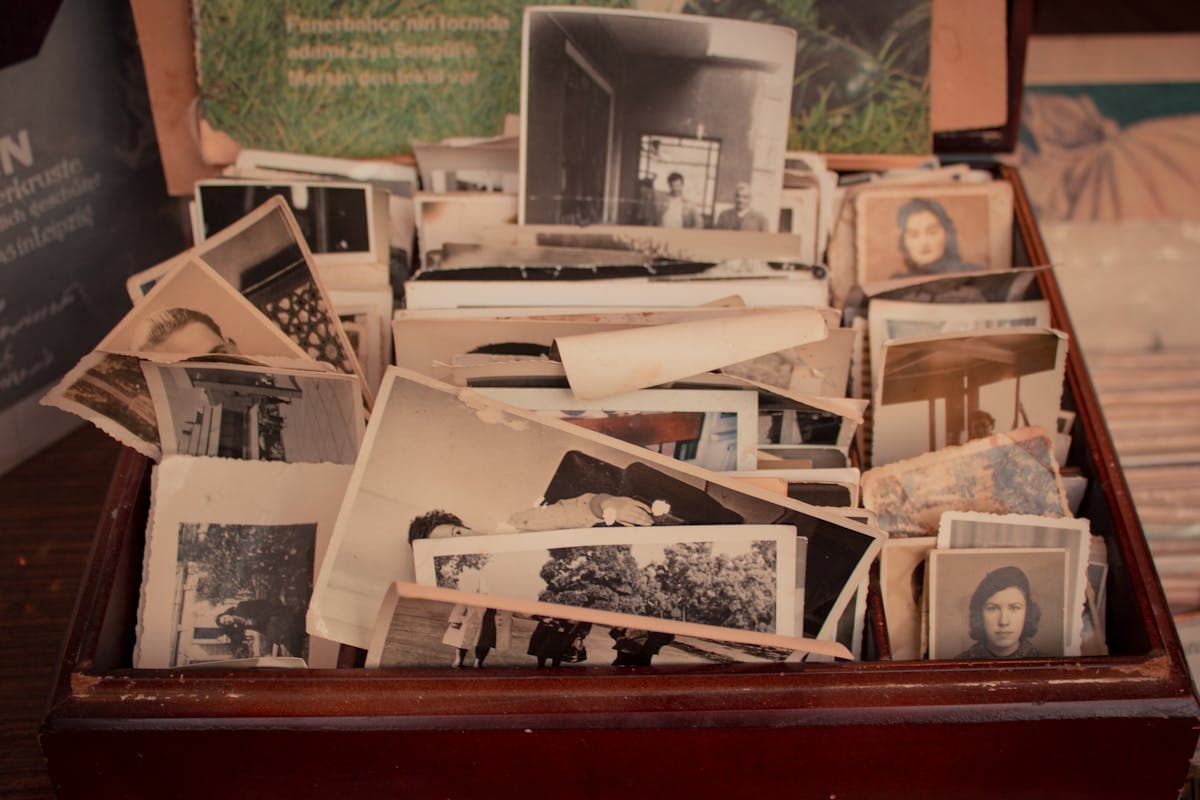
There's a good chance your great-grandparents had stories that would blow your mind. Adventures, hardships, romances, close calls, ridiculous situations. Lives full of texture and detail that would make you see your own family completely differently.
You'll probably never hear any of them.
Research on family narrative suggests that most stories disappear within two to three generations. Your grandparents' stories have a reasonable chance of reaching you. Their grandparents' stories almost certainly won't. Not because they weren't worth telling, but because nobody wrote them down, recorded them, or made a point of passing them along.
This isn't a new problem. It's an old problem that's getting worse.
Why Stories Disappear
The simplest reason is that people die. That's obvious. But what's less obvious is how much context dies with them.
When your grandmother tells a story about her childhood, she's not just reciting events. She's filling in a thousand background details that she doesn't even realize she's providing. The tone of her voice when she talks about her father. The way she describes the smell of the bakery down the street. The pause before she mentions a sibling she doesn't talk to anymore. All of that context is part of the story, and none of it survives in a family tree or a genealogy database.
But death isn't the only culprit. Distance plays a huge role. Families used to live close together, often in the same house or on the same street. Stories were told and retold at dinner tables, on porches, during long car rides. The repetition is what made them stick. You didn't hear your grandfather's war story once. You heard it twenty times, and by the tenth time, it was as much yours as his.
Modern families are scattered. Sunday dinner is a FaceTime call if it happens at all. The casual, repetitive storytelling that preserved family narratives for centuries has largely disappeared.
There's also a generational gap that keeps widening. The world your grandparents grew up in is so different from the one you live in that their stories can feel like they happened on another planet. It takes deliberate effort to bridge that gap, and most families don't make that effort until it's too late.
What's Actually Lost
When family stories disappear, you might think you're just losing entertainment. Old tales that would be nice to hear but aren't essential. That's not quite right.
Psychologists who study family narratives have found that children who know their family's stories tend to have a stronger sense of identity, higher self-esteem, and better coping skills. Knowing that your family has faced hard times and gotten through them gives you a framework for dealing with your own challenges. It's not abstract resilience advice. It's specific: "Your grandmother immigrated here with nothing and built a life. Your uncle failed at two businesses before the third one worked. Your family has been through worse than this."
Family stories also create connection across generations. When you know the story of how your grandparents met, you see them as real people with a history, not just old people in a recliner. That connection matters, especially as families get more fragmented and isolated.
And there's a practical dimension too. Family stories carry information about health patterns, personality traits, cultural traditions, and values that simply don't exist anywhere else. Your grandfather's story about "that time I couldn't breathe right for a year" might be the first clue about an inherited condition. Your great-aunt's description of how the family celebrated holidays in the old country might be the only record of a tradition that's been lost.
Why People Don't Record Them
If family stories are so valuable, why don't people make more effort to preserve them? A few reasons.
The first is procrastination. "I'll ask Grandma about that next time I visit." Then next time comes and you talk about the weather and what's happening at work, and the deeper questions never come up. Repeat this for years and suddenly you're at a funeral wishing you'd asked.
The second is not knowing what to ask. "Tell me about your life" is a terrible question. It's too big. The person being asked doesn't know where to start, so they give you a summary that sounds like a resume. The stories you actually want are buried in the specifics, and you need the right questions to dig them out.
The third is an assumption that someone else is doing it. In every family, there's usually one person who's "into genealogy" or "really close with grandma." Everyone else assumes that person is collecting the stories. Usually, they're not. They're collecting names and dates, which is a completely different thing.
And the fourth is that people underestimate urgency. They assume their grandparents will be around for a while, that there's no rush. Sometimes they're right. But cognitive decline, sudden illness, and accidents don't announce themselves in advance. The window for collecting stories is always smaller than you think.
What You Can Do
The good news is that saving family stories is not complicated. It doesn't require special equipment, professional training, or a huge time commitment. Here's what actually works.
Start with one person and one question. Don't try to do a comprehensive family history project. Call your mom and ask her what her favorite memory of her grandparents is. That's it. One question, one conversation. See what comes out.
Ask specific questions, not broad ones. "What was your childhood like?" will get you nothing. "What's the most trouble you ever got into as a kid?" will get you a story. The more specific the question, the more vivid the memory it triggers. Ask about scenes, not summaries.
Record the conversation. You don't need anything fancy. The voice recorder on your phone works fine. Just let your relative know you're recording and why. Most people are flattered that someone cares enough to preserve their stories.
Follow the thread. When someone mentions a person, a place, or an incident that sounds interesting, ask about that. "Wait, who was this friend? What were they like?" The best stories come from follow-up questions, not from a prepared list.
Write it down afterward. Even if you recorded the conversation, take a few minutes afterward to write down the highlights. What surprised you? What was funny? What did you learn that you didn't know before? These notes become valuable artifacts in themselves.
Make it regular. One conversation is great. A regular practice is transformative. Once a month, once a week, whatever works. The more you ask, the more comfortable the other person gets, and the deeper the stories go. First-time conversations tend to produce the well-worn favorites. The really good stuff comes out on the fifth or sixth conversation, when someone trusts you enough to share the stories they've never told anyone.
Share what you collect. Send the stories to your siblings, cousins, and anyone else who might care. Stories that live in one person's phone or notebook are still at risk. Stories that are shared with the whole family take on a life of their own.
The Window Is Open Now
Here's the uncomfortable truth: for every family, there's a finite window during which the most important stories can still be collected. Once the people who lived those stories are gone, the window closes permanently.
For most families reading this, that window is open right now. Your grandparents, your elderly parents, your aging aunts and uncles are carrying stories that only they can tell. Stories about where your family came from, what they survived, what made them laugh, and what they loved.
These stories aren't going to preserve themselves. They never have. Throughout all of human history, family stories have survived only because someone made the deliberate choice to ask, to listen, and to pass them on.
That someone can be you. And the best time to start is now.
Start Preserving Your Family's Stories
Atrium sends thoughtful questions to your family and turns their answers into a growing collection of stories. Free to start.
Get Started Free